


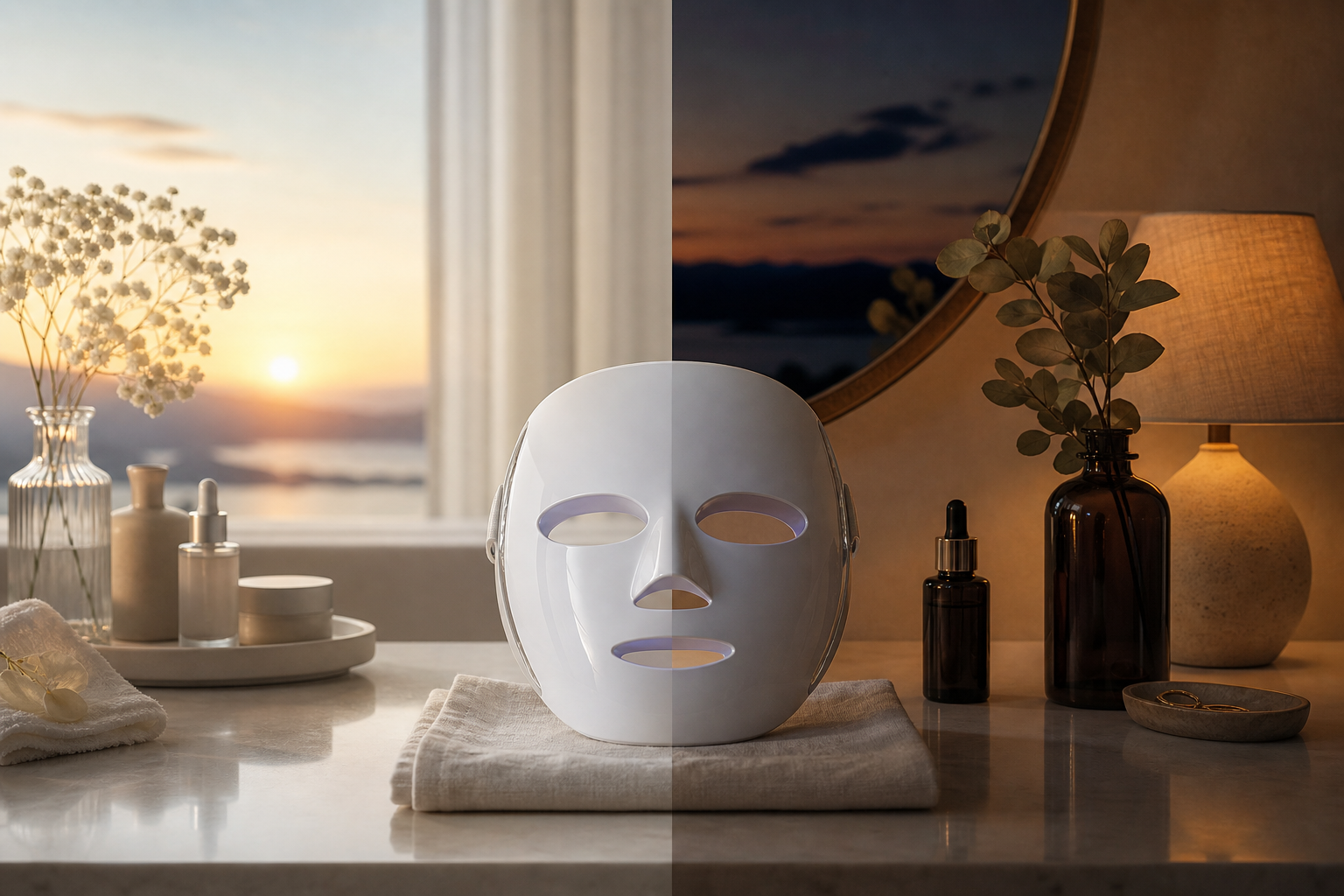
Morning or Evening? Choosing the Right Time for Your LED Mask Session
One of the most common questions from people new to at-home light therapy is simple: should you use your mask in the morning or at night? The honest answer is that both can work beautifully. What matters far more than the hour on the clock is choosing a time you can return to consistently, and building a short ritual around it that you genuinely look forward to.
Why timing matters less than consistency
Skincare rewards repetition. A short session you actually keep up several times a week will always do more for you than an elaborate routine you abandon after a fortnight. So the first question is not “which time is best in theory?” but “which time fits my real life?” If your mornings are rushed and your evenings calm, an evening session is the obvious choice. If you fade by bedtime and feel sharpest at dawn, mornings may suit you better.
The case for morning sessions
A morning session can become a gentle way to start the day. Your skin is freshly cleansed, you are not yet wearing makeup, and there is something grounding about a few quiet minutes before the day accelerates. Morning users often pair the session with a cup of coffee, a podcast, or simply a moment of stillness. The main consideration is logistics: you need to build the minutes into your schedule so the session does not get squeezed out by a busy start.
The case for evening sessions
For many people, evenings win on practicality. The day’s makeup and sunscreen come off, the pace slows, and a session slots naturally into the wind-down before sleep. An evening ritual can also signal to your mind that the day is closing — a small cue to step away from screens and ease into rest. If you find mornings chaotic, the evening is usually the more sustainable home for a regular habit.
How to build a simple session around your mask
Whichever time you choose, keep the surrounding routine short and pleasant so it stays effortless:
- Cleanse gently and pat your skin dry, so the surface is clean and bare.
- Settle somewhere comfortable where you can relax for the length of the session.
- Use your Nephaea LED Light Therapy Mask as directed, keeping your eyes relaxed and closed.
- When the session ends, follow with your usual serum and moisturizer.
- In the morning, finish with sunscreen; in the evening, keep the lights low and head toward rest.
Listen to your own rhythm
The best schedule is the one you barely have to think about. Some people enjoy the energy of a morning ritual; others treasure the calm of an evening one. A few alternate with the seasons, leaning into mornings in summer’s long light and evenings in winter. None of these choices is wrong. Give one a try for a couple of weeks, notice how it feels, and adjust without guilt if another time fits your life better.
Light therapy is meant to be a small, restorative pause rather than another item on a crowded to-do list. Whether you choose sunrise or moonlight, the goal is the same: a few unhurried minutes for yourself, repeated often enough to become second nature. Explore the Nephaea LED Light Therapy Mask and find the moment in your day that feels most like yours.
Written by Nephaea Editorial

Leave a comment
This site is protected by hCaptcha and the hCaptcha Privacy Policy and Terms of Service apply.