


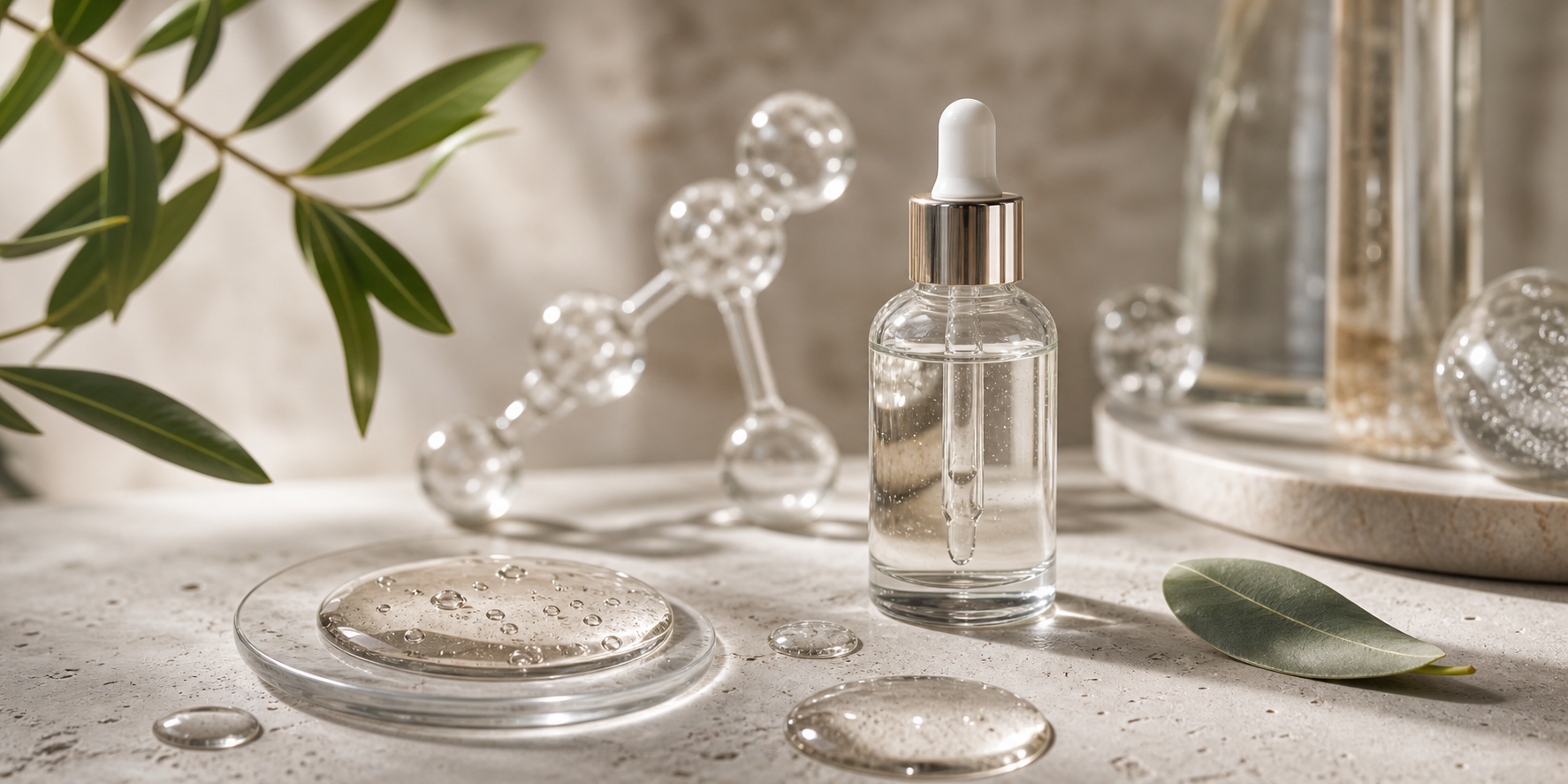
Peptides in Skincare: A Quiet Revolution
Peptides have moved from laboratory curiosity to a quietly essential part of modern skincare. Here's what they are, how research suggests they may support skin wellness, and how to bring them into your daily routine with care.
What Are Peptides, Really?
Peptides are short chains of amino acids — the same building blocks that make up proteins like collagen and elastin. In skincare research, they are studied for their potential to act as small messengers, signaling skin cells to behave in particular ways.
The word itself comes from the Greek peptos, meaning “digested” or “broken down.” Peptides are essentially proteins broken into smaller, more nimble pieces — small enough to be of interest to researchers studying skincare formulations.
Why Peptides Have Captured Attention
For decades, skincare research focused largely on protecting the skin barrier or delivering moisture. Peptides represented a shift in thinking. Instead of working only on the surface, peptides are studied as ingredients that may interact with deeper layers of skin over time.
Research suggests several categories of peptides, each studied for different functions:
- Signal peptides — studied for their potential to communicate with skin cells, encouraging collagen-related processes
- Carrier peptides — researched for their ability to deliver trace elements to the skin
- Enzyme-inhibiting peptides — studied for their potential to slow the breakdown of existing collagen
- Neurotransmitter-inhibiting peptides — examined in research settings for their interaction with expression-related skin patterns
Each category represents a different angle of inquiry. Together, they explain why “peptide complex” appears so often on modern serum labels — formulators often combine peptides for layered effects.
The Plant-Based Peptide Conversation
Traditionally, peptides studied in skincare came from biotech laboratories — synthesized in controlled environments. More recently, researchers have looked at plant-based and botanically-derived peptides, which offer similar molecular structures from natural sources.
Plant-based peptides have gained interest because they align with the broader move toward clean, transparent formulations. For people building a thoughtful skincare ritual, they offer a way to incorporate peptide science without compromising on values around sourcing and sustainability.
Where Peptides Fit in a Daily Ritual
Peptide serums are typically designed to layer between cleansing and moisturizing. The sequence is intentional: peptides are most often formulated to absorb on clean, slightly damp skin, then sealed in by a moisturizer that helps the ingredients settle.
A thoughtful peptide ritual might look like this:
- Cleanse — remove the day with a gentle cleanser, then pat dry
- Apply — two to three drops of peptide serum, warmed between fingertips
- Press, do not rub — press the serum into clean skin with the pads of your fingers
- Wait — let it settle for thirty seconds before the next layer
- Seal — follow with your moisturizer to lock in the serum
The principle is patience. Peptide research often emphasizes consistency over intensity — a small amount, used daily, tends to be the rhythm most often studied.
Pairing Peptides with Light Wellness
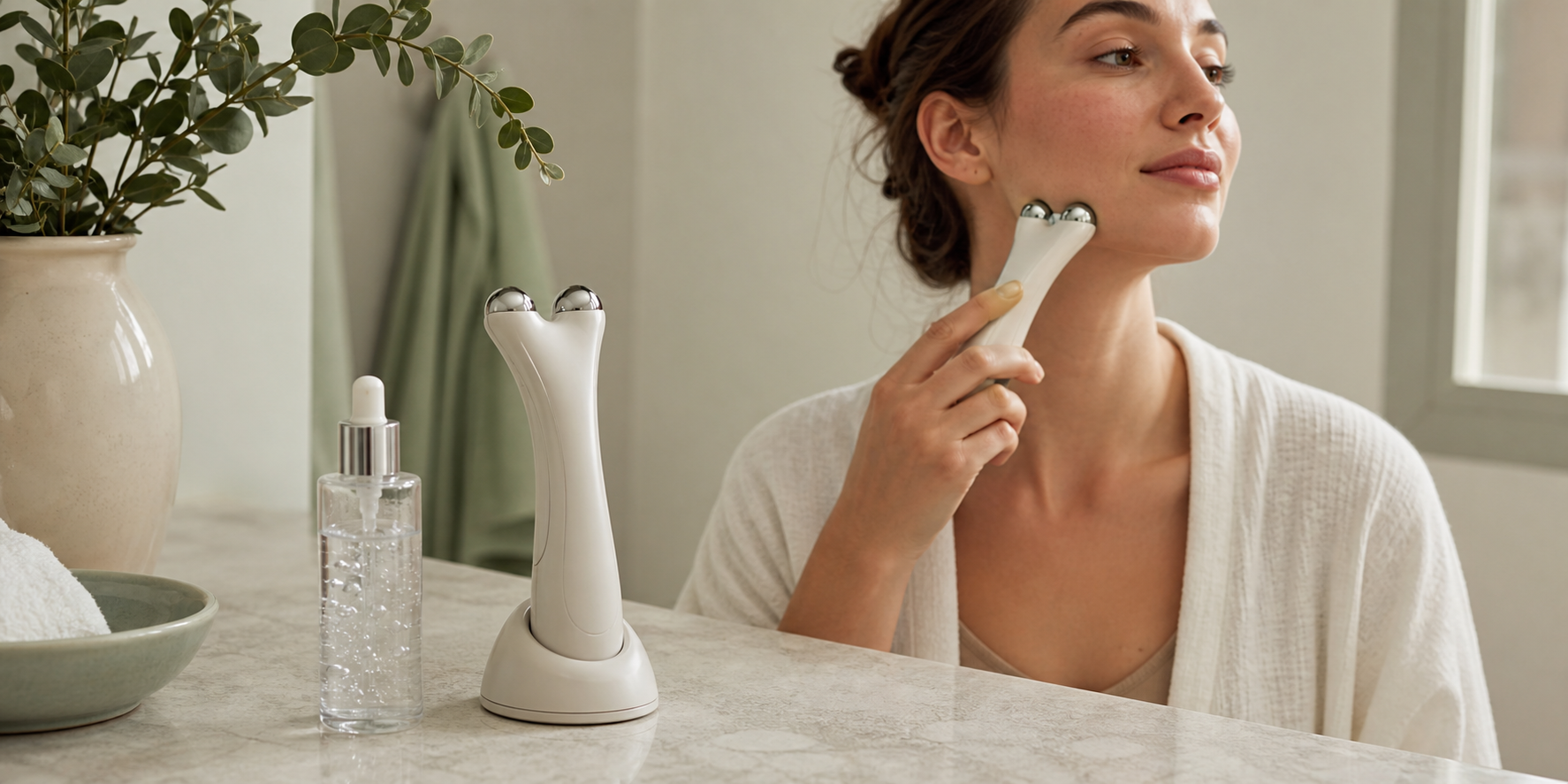
Peptide serums pair particularly well with light therapy and microcurrent rituals. Research settings have explored how prepared skin — recently treated with light or microcurrent — may be more receptive to topical formulations.
If you incorporate at-home light therapy into your routine, applying a peptide serum immediately after the session is a common approach. The skin is warm, freshly stimulated, and most receptive to whatever you apply next.
What Peptides Are Not
In a market full of bold promises, it's worth being honest about what peptides are. They are not a quick fix. They are not a single answer. They are ingredients studied for their potential role in long-term skin wellness — ingredients that reward consistency.
Most peptide research observes effects over weeks and months, not days. Anyone telling you otherwise is selling something different from what science has explored.
Bringing Peptides into Your Ritual
If you're new to peptides, start simply. One serum, used daily, applied with intention. Notice how your skin feels over four to six weeks. Skincare rituals reward attention more than complexity — a single thoughtful product, used consistently, tends to teach you more than five layered ones used inconsistently.
The Nephaea Phyto Renewal Serum brings together a plant-based renewal complex, peptide technology, and vitamin B5 for barrier support. It's designed to layer beautifully with daily skincare and at-home devices — a quiet companion for the slow art of caring well for your skin.
General wellness disclaimer: Nephaea skincare products are intended for general wellness and personal care. They are not intended to diagnose, treat, cure, or prevent any disease. Statements have not been evaluated by the FDA.


Leave a comment
This site is protected by hCaptcha and the hCaptcha Privacy Policy and Terms of Service apply.