


Light That Goes Deeper
Targeted wavelengths stimulate your skin’s natural rejuvenation process from within.
What is Light Therapy?
Light Therapy, also called photobiomodulation, uses specific wavelengths of light to interact with the body at a cellular level.
Red Light was first explored by NASA in the 1990s to support wound healing in space; it has since been the subject of extensive research into its wide-ranging effects on skin and tissue health.
Today, modern LED devices use high-quality LEDs to deliver these wavelengths safely and effectively.
Why Light Therapy Works
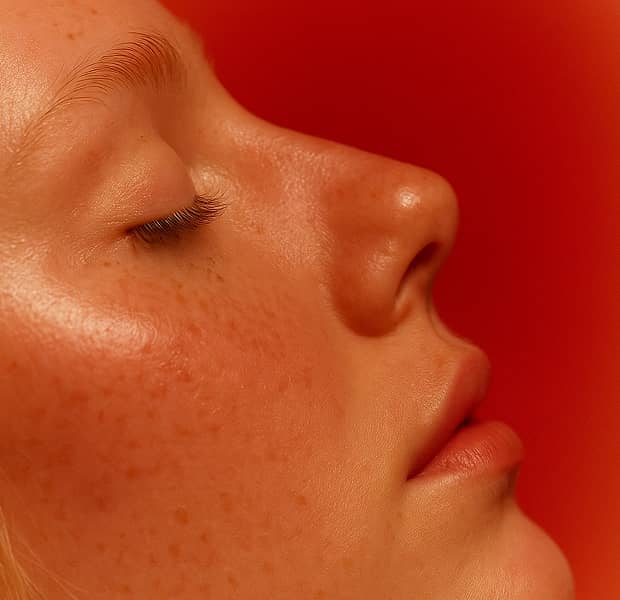
Your body responds to certain wavelengths of light by converting them into usable energy.
That energy helps cells do what they already do—like renewing, repairing, and restoring themselves—by supporting natural biological processes.
That’s why Light Therapy is trusted by dermatologists, athletes, and estheticians alike.
The Light Spectrum, Explained
Light comes in different wavelengths, each appearing as a different color. These wavelengths penetrate the skin at varying depths, triggering different biological responses depending on how far they reach.
The Penetration
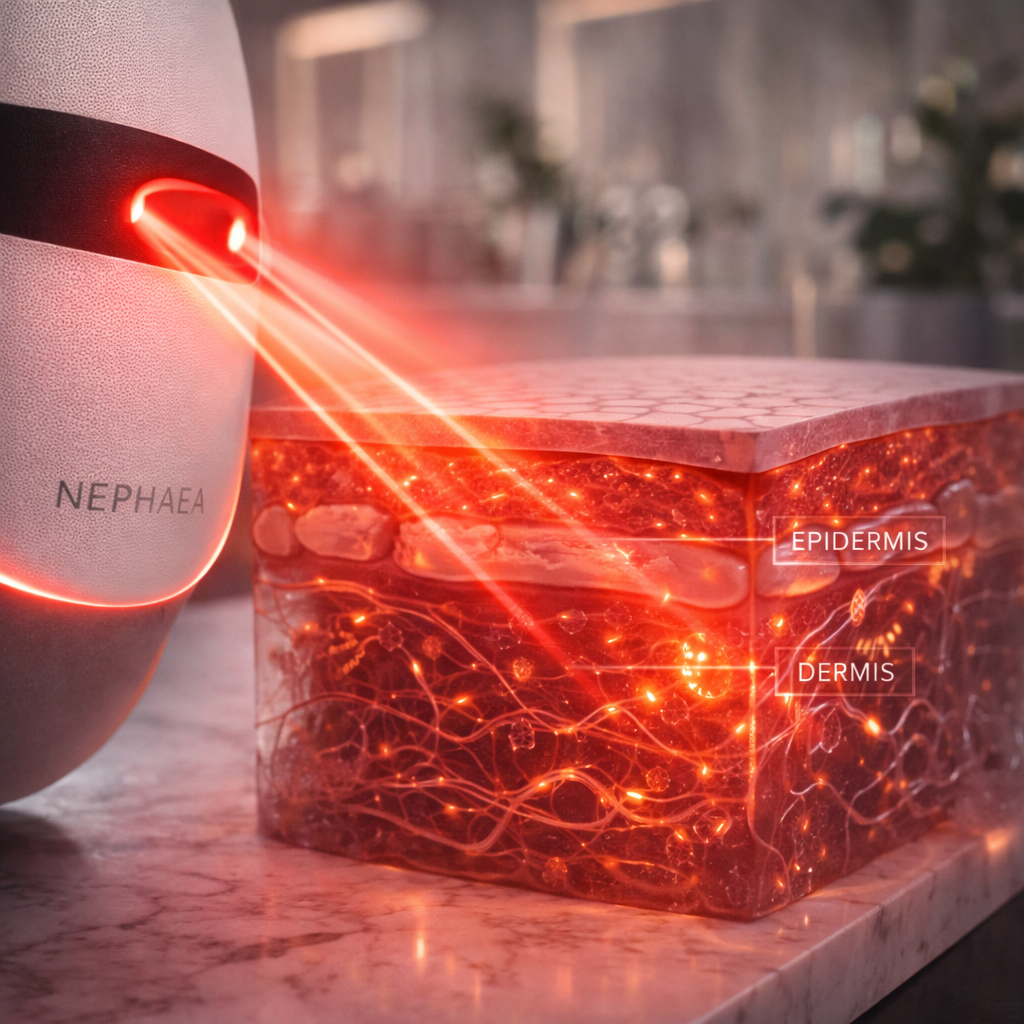
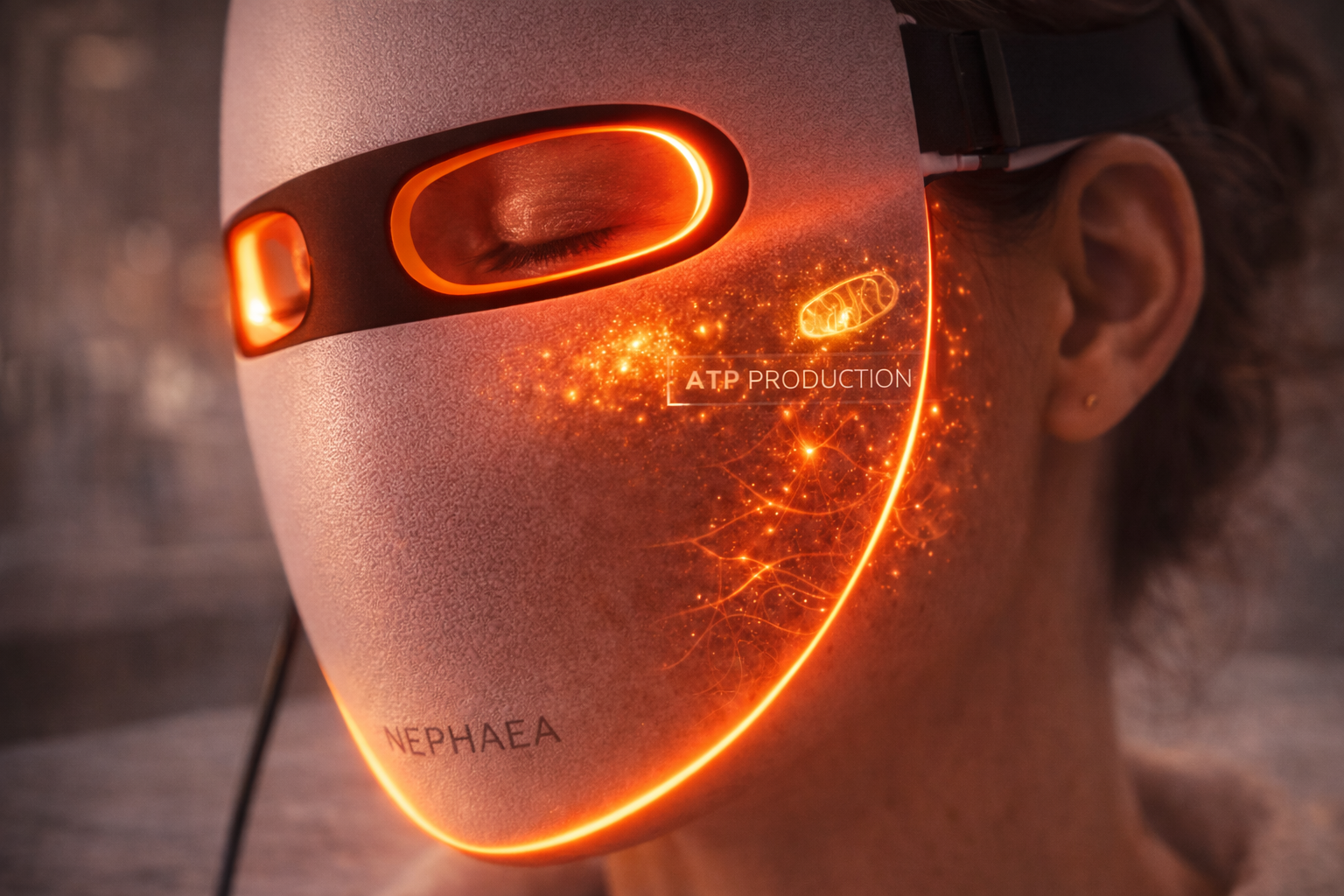
Optimized Red and Near-Infrared wavelengths penetrate deep into the dermis.
The Activation
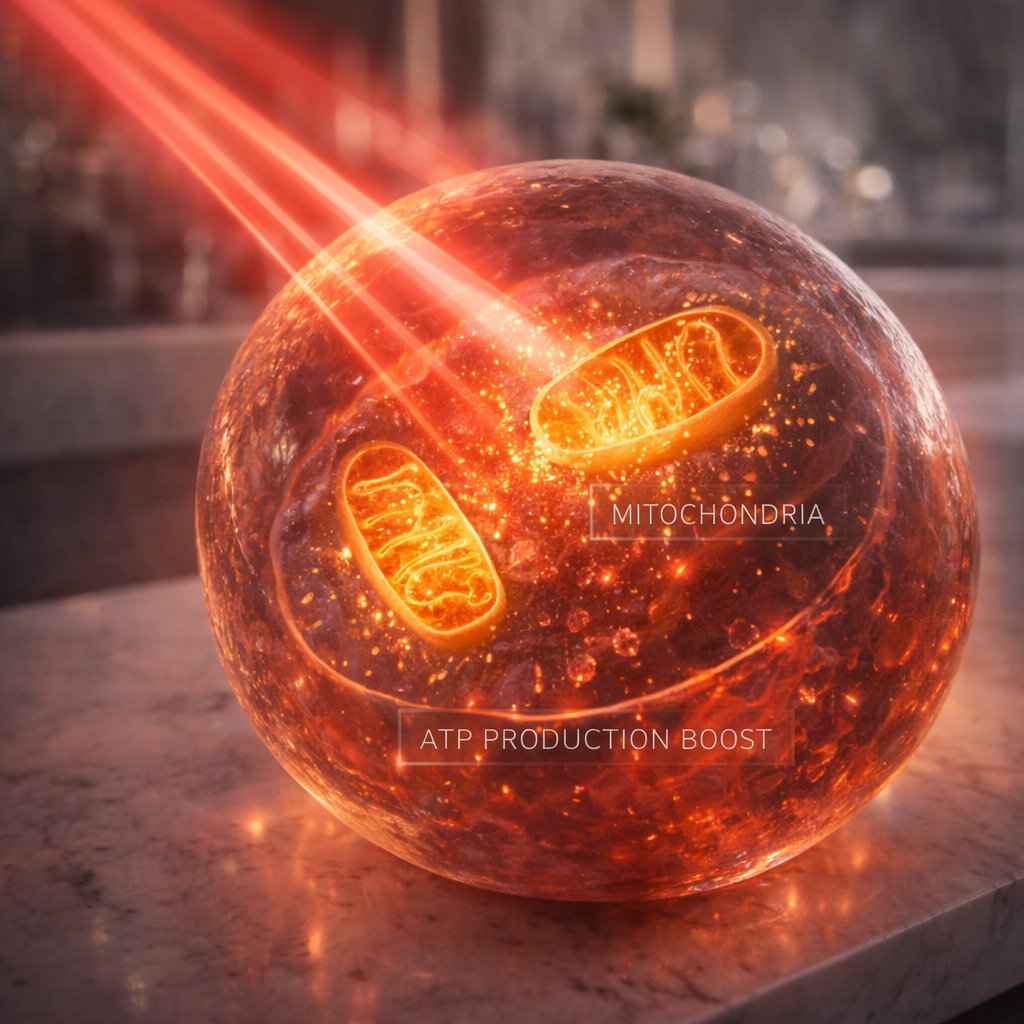
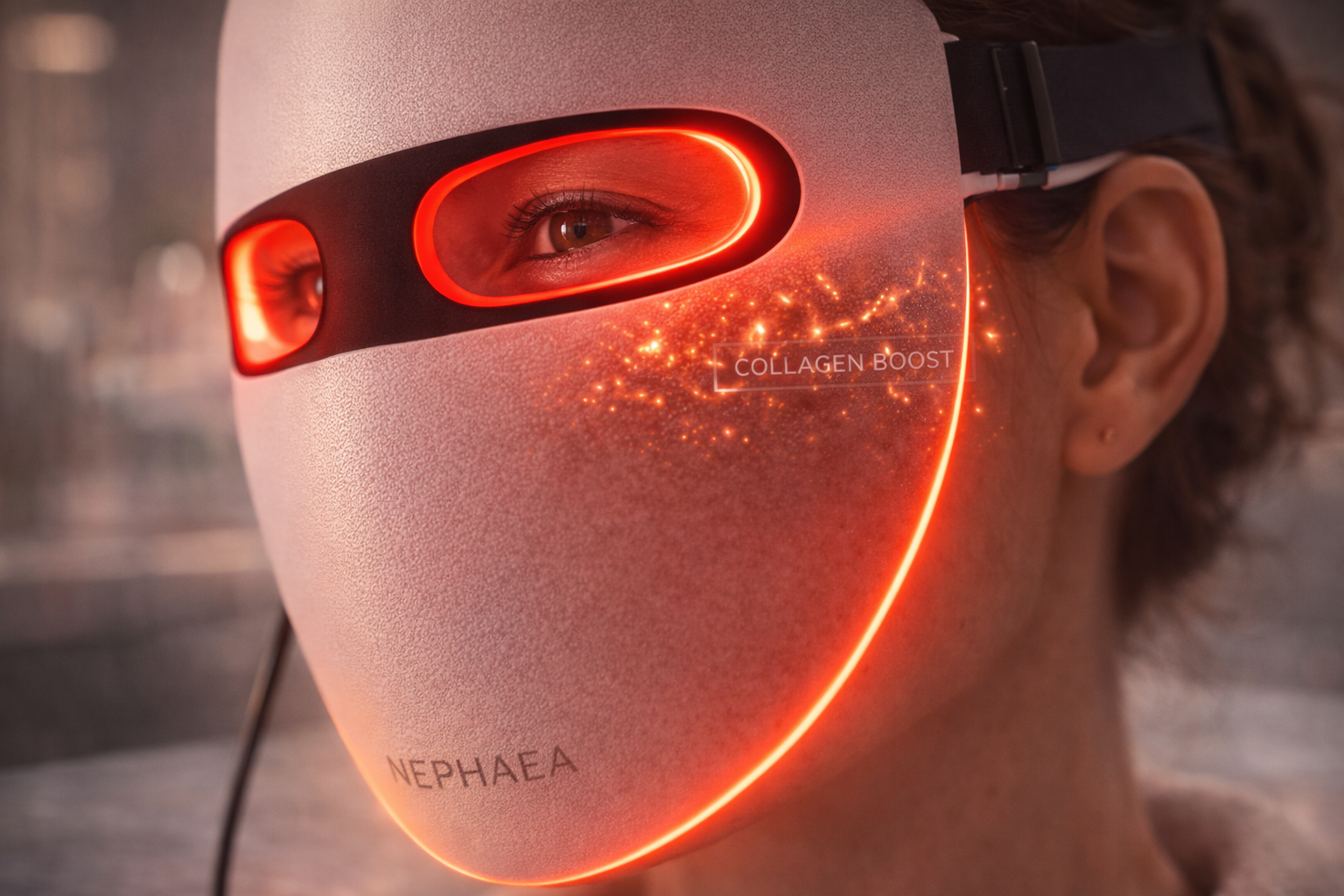
The light energy is absorbed by mitochondria, boosting ATP production.

The Rejuvenation
Supercharged cells accelerate collagen production and skin renewal. Blue light targets surface bacteria for clearer skin.
Our Wavelengths
Red Light (630nm + 660nm): Targets the surface. Stimulates collagen, reduces inflammation, and evens skin tone.
Near-Infrared Light (850nm): Goes deeper. Reaches the deepest layers of the skin to support cell repair and enhance blood flow.
FAQ
LED light therapy (also called photobiomodulation) uses specific wavelengths of visible and near-infrared light to stimulate natural processes within your skin cells. When these wavelengths reach your cells, they are absorbed by the mitochondria — the energy centers inside each cell — which triggers increased cellular energy (ATP) production. This leads to boosted collagen synthesis, reduced inflammation, and faster cell turnover. It's the same science used in dermatology clinics worldwide, now available for home use.
No. LED therapy uses visible red light and near-infrared light, which are completely different from ultraviolet (UV) rays. UV light can cause sunburn and DNA damage — LED light does not. It generates no UV radiation, no heat damage, and is classified as non-ionizing. Nephaea is tested to international photobiological safety standards (IEC 62471).
Laser procedures use concentrated, high-intensity light and are typically performed by professionals. At-home LED devices use arrays of lower-intensity light for a gentler, non-invasive skincare routine. They are different experiences with different purposes, so follow the instructions for your device and consult a qualified professional when choosing an in-office procedure.
Each wavelength penetrates to a different depth and triggers a different response:
Red light (660nm) reaches the upper skin layers, where it stimulates collagen production, reduces redness, and supports an even skin tone.
Near-infrared light (850nm) penetrates deeper into the dermis, where it supports cell repair, improves blood flow, and helps reduce inflammation at a structural level.
Together, these wavelengths work as a team — red light renews the surface while near-infrared repairs from within.
Yes. Nephaea has been tested and complies with the IEC 62471 photobiological safety standard. Protective eye shields are included with your mask for added comfort, though they are optional. We recommend keeping your eyes closed during treatment.
LED light does not target melanin in the same way as some laser procedures and is commonly used across a wide range of skin tones. Individual experiences can vary. Follow the device instructions and speak with a qualified professional if you have questions about your skin or routine.
While LED light therapy is generally considered safe and non-invasive, we recommend consulting with your healthcare provider before use during pregnancy or breastfeeding, as a precaution.
LED light therapy is not recommended for people who:
- Are taking photosensitizing medications (certain antibiotics, retinoids, or anti-cancer drugs)
- Have epilepsy or seizure disorders triggered by flashing light
- Have active skin cancer on the treatment area
If you have any medical conditions or are currently on prescription medication, consult your dermatologist before starting LED therapy.
Ready to Start Your Ritual?
Free US Shipping · 3-Year Warranty · 60-Day Returns